Showing posts with label sari berita penting. Show all posts
Showing posts with label sari berita penting. Show all posts
The crisis in Egypt is not over. At least according to this letter made public at one of the groups I followed,
I know this has nothing to do with the regular post I put in this stupid blog, but still, this letter deserves whatever publication it can get, serving its purpose as a notification, and a warning for those concerned.
the letter is courtesy of Harry Surjadi, sent by Joyce Barnathan who interviewed Yehia Ghanem.
ps. PressTV, whom I worked for six months back in 2011, also had an interview with Yehia Ghanem on Sept.11, 2011, before the following indictment.
------------------------
courtesy of PressTV
Now that the U.S. employees of the NGOs indicted in Egypt are out of the country, many Americans think the crisis there is over. That couldn’t be further from the truth. The International Center for Journalists has two Egyptian employees facing criminal charges that could land them in jail for five years.
Today, the Egyptians (and one American who chose not to evacuate) stood in a cage in a Cairo courtroom during a new hearing. One of them was Yehia Ghanem, ICFJ’s project director and a seasoned editor and war correspondent at the state-run newspaper Al Ahram. He was organizing our program for professional and citizen journalists when he was indicted.
All of us at ICFJ feel it is so important to understand how difficult this situation is for the Egyptians who work for U.S. NGOs. For that reason, I want to share with you excerpts from my exchange with Ghanem.
Q) What is the most difficult part of this ordeal?
A) When my 11-year old daughter called me crying over the phone to ask if I had taken a bribe from the U.S. to harm the national security of Egypt. The reason she asked: the investigating judges went public with the indictments without bothering to inform us—the accused—beforehand and at least give us a chance to let our families know before they went to the press. I was in the car on the way to my office when my daughter called me. I hurried home to find my children in a state of shock. I had to swear to them that their father is an honest man who would never betray his values, not to mention his country.
Now that the Americans under indictment are out of Cairo, what is the situation for you and the other Egyptians?
I do hope they will not sort out this fictitious case in the same political way it got started. For if they do, many questions will remain hanging over defendants’ heads in the eyes of the public thanks to merciless character assassination campaigns in the media. The best way to end this case is in the court of law, to prove not only the innocence of the wrongly accused, but also to expose how the whole situation was faked—and by whom. Such exposure will be a message for tomorrow's fakers not to be born today.
Many of us were distressed to see you and other Egyptian defendants put in a cage during the first hearing. What was going through your mind then?
Anger, pain and defiance are the right words. I got carried away by a variety of thoughts: How many out there deserve to be in the cage instead of me? How many people are at large and enjoying what they usurped from this nation, yet they are out there entertaining themselves by watching me in the cage?
How were the other defendants?
I saw a young lady, one of the defendants, crying her eyes out. She asked to hide behind my back—away from the photojournalists flashing their cameras. Then I felt even more angry over those who were forcing a 25-year-old to go through this ordeal.
I asked her: “Did you do anything that they alleged?” She swore to God that she did not. I said: “Then you should not feel ashamed to face the cameras. You should stand tall and face them. You should make them feel ashamed to force you into this cage.” Moments later, her tears dried up and she was standing beside me defying cameras.
You were about to be promoted at Al Ahram. What is your situation there now?
I was denied the promotion to chief editor after many colleagues took advantage of this faked case. They launched a campaign against me without giving me the right to respond. Some went as far as to call for banning me from the premises of Al Ahram. I do thank the chairman of the board who refrained from doing so. For now, I still hold the position as deputy chief editor.
A new court date has been set for April 10.
Yes, in spite of all this, I am going to trial, standing tall, believing in what I did, and knowing that I am being tried for things that I did not do. I am going to the trial with absolute trust in divine justice, in my country and in Egypt's judicial system. I do believe that Egypt is worthy of any sacrifice, even the soul itself, even if that means being dragged to criminal court on baseless charges. It is such a cheap price for a much better and more beautiful Egypt.
How is your family coping?
They are confident of my innocence and my integrity. However, they are suffering intolerable pain because of the fierce campaign waged by media against me. Meantime, I keep telling them that one thing I learned throughout the 18 years that I worked as a war correspondent is endless patience, which has become one of my favorite virtues. Also, I learned from this kind of journalism that you should not be afraid of the sound of a bullet. For as long as you can hear its sound, you know you are still alive. So the louder the noise from bad people, the more certain I am that I am alive and even kicking.
So please, remember that there still are people on the ground, who are fighting for their dignity, respect and livelihood in Egypt.
Best regards,
Joyce Barnathan
President
International Center for Journalists
The tributes to Dennis Ritchie won't match the river of praise that spilled out over the web after the death of Steve Jobs. But they should.
And then some.
"When Steve Jobs died last week, there was a huge outcry, and that was very moving and justified. But Dennis had a bigger effect, and the public doesn't even know who he is," says Rob Pike, the programming legend and current Googler who spent 20 years working across the hall from Ritchie at the famed Bell Labs.
On Wednesday evening, with a post to Google+, Pike announced that Ritchie had died at his home in New Jersey over the weekend after a long illness, and though the response from hardcore techies was immense, the collective eulogy from the web at large doesn't quite do justice to Ritchie's sweeping influence on the modern world.
Dennis Ritchie is the father of the C programming language, and with fellow Bell Labs researcher Ken Thompson, he used C to build UNIX, the operating system that so much of the world is built on -- including the Apple empire overseen by Steve Jobs.
"Pretty much everything on the web uses those two things: C and UNIX," Pike tells Wired. "The browsers are written in C. The UNIX kernel — that pretty much the entire Internet runs on -- is written in C. Web servers are written in C, and if they're not, they're written in Java or C++, which are C derivatives, or Python or Ruby, which are implemented in C. And all of the network hardware running these programs I can almost guarantee were written in C.
"It's really hard to overstate how much of the modern information economy is built on the work Dennis did."
Even Windows was once written in C, he adds, and UNIX underpins both Mac OS X, Apple's desktop operating system, and iOS, which runs the iPhone and the iPad. "Jobs was the king of the visible, and Ritchie is the king of what is largely invisible," says Martin Rinard, professor of electrical engineering and computer science at MIT and a member of the Computer Science and Artificial Intelligence Laboratory.
"Jobs' genius is that he builds these products that people really like to use because he has taste and can build things that people really find compelling. Ritchie built things that technologists were able to use to build core infrastructure that people don't necessarily see much anymore, but they use everyday."
From B to C
Dennis Ritchie built C because he and Ken Thompson needed a better way to build UNIX. The original UNIX kernel was written in assembly language, but they soon decided they needed a "higher level" language, something that would give them more control over all the data that spanned the OS. Around 1970, they tried building a second version with Fortran, but this didn't quite cut it, and Ritchie proposed a new language based on a Thompson creation known as B.
Depending on which legend you believe, B was named either for Thompson's wife Bonnie or BCPL, a language developed at Cambridge in the mid-60s. Whatever the case, B begat C.
B was an interpreted language -- meaning it was executed by an intermediate piece of software running atop a CPU -- but C was a compiled language. It was translated into machine code, and then directly executed on the CPU. But in those days, C was considered a high-level language. It would give Ritchie and Thompson the flexibility they needed, but at the same time, it would be fast.
That first version of the language wasn't all that different from C as we know it today -- though it was a tad simpler. It offered full data structures and "types" for defining variables, and this is what Richie and Thompson used to build their new UNIX kernel. "They built C to write a program," says Pike, who would join Bell Labs 10 years later. "And the program they wanted to write was the UNIX kernel."
Ritchie's running joke was that C had "the power of assembly language and the convenience of ... assembly language." In other words, he acknowledged that C was a less-than-gorgeous creation that still ran very close to the hardware. Today, it's considered a low-level language, not high. But Ritchie's joke didn't quite do justice to the new language. In offering true data structures, it operated at a level that was just high enough.
"When you're writing a large program -- and that's what UNIX was -- you have to manage the interactions between all sorts of different components: all the users, the file system, the disks, the program execution, and in order to manage that effectively, you need to have a good representation of the information you're working with. That's what we call data structures," Pike says.
"To write a kernel without a data structure and have it be as consist and graceful as UNIX would have been a much, much harder challenge. They needed a way to group all that data together, and they didn't have that with Fortran."
At the time, it was an unusual way to write an operating system, and this is what allowed Ritchie and Thompson to eventually imagine porting the OS to other platforms, which they did in the late 70s. "That opened the floodgates for UNIX running everywhere," Pike says. "It was all made possible by C."
Apple, Microsoft and beyond
At the same time, C forged its own way in the world, moving from Bell Labs to the world's universities and to Microsoft, the breakout software company of the 1980s. "The development of the C programming language was a huge step forward and was the right middle ground ... C struck exactly the right balance, to let you write at a high level and be much more productive, but when you needed to, you could control exactly what happened," says Bill Dally, chief scientist of NVIDIA and Bell Professor of Engineering at Stanford. "[It] set the tone for the way that programming was done for several decades."
As Pike points out, the data structures that Richie built into C eventually gave rise to the object-oriented paradigm used by modern languages such as C++ and Java.
The revolution began in 1973, when Ritchie published his research paper on the language, and five years later, he and colleague Brian Kernighan released the definitive C book: The C Programming Language. Kernighan had written the early tutorials for the language, and at some point, he "twisted Dennis' arm" into writing a book with him.
Pike read the book while still an undergraduate at the University of Toronto, picking it up one afternoon while heading home for a sick day. "That reference manual is a model of clarity and readability compared to latter manuals. It is justifiably a classic," he says. "I read it while sick in bed, and it made me forget that I was sick."
Like many university students, Pike had already started using the language. It had spread across college campuses because Bell Labs started giving away the UNIX source code. Among so many other things, the operating system gave rise to the modern open source movement. Pike isn't overstating it when says the influence of Ritchie's work can't be overstated, and though Ritchie received the Turing Award in 1983 and the National Medal of Technology in 1998, he still hasn't gotten his due.
As Kernighan and Pike describe him, Ritchie was an unusually private person. "I worked across the hall from him for more than 20 years, and yet I feel like a don't knew him all that well," Pike says. But this doesn't quite explain his low profile. Steve Jobs was a private person, but his insistence on privacy only fueled the cult of personality that surrounded him.
Ritchie lived in a very different time and worked in a very different environment than someone like Jobs. It only makes sense that he wouldn't get his due. But those who matter understand the mark he left. "There's that line from Newton about standing on the shoulders of giants," says Kernighan. "We're all standing on Dennis' shoulders."
Additional reporting by Jon Stokes
----
the last image courtesy of artist juan osborne, I hope he/she won't sue me for using his/her work with no prior notice and consider this an advertisement of his/her work instead.
The mad professor of guitar science explained two things throughout his two-hour Laney clinic this Tuesday: That being crazy is cool for geniuses and that every guitar player wannabe should grow their own mustache.
It was almost seven o'clock, and the steep climb to the second floor of Balai Kartini didn't look inviting to those coming late. Two excited looking guys waited for the elevator with one of them holding the cassette cover of Freak Kitchen's fourth effort in 2000: Dead Soul Men.
Rushing toward the Mawar conference room, the annoying bunch blocking the entrance was the consequence of Planet Musik's generosity, as it had displayed 20 new, flashy guitars and basses, from Cort to Music Man Stingray.
The inside, nevertheless, was predictably overflowing, just like the Ciliwung River in December.
Feeling like one had just stepped into a guerrilla meeting in a typical balai kecamatan before an important ambush, all the chairs were full. The rest were hovering in the back of the hall, with more than 20 people on the floor on the left side of the stage, facing stacks of Laney amplifiers.
The space between the stage and the seats was gone, replaced by the boney faces of guitar mongers.
"The sales number of cassettes and CDs in Indonesia has reached around 10 million per year -- fought over by not just local, but also international artists. Passband survived by building a solid fan base; fans who love our music, love watching us live and love buying tickets to our concerts," the voice of Passband's Beng-Beng bounced off the high ceiling of the room, in answer to a question about the band being different from mainstream, mellow, lovey-dovey Indonesian music.
Along with Beng-Beng, local bass hero Indro Hardjodikoro opened the clinic for Ia (Mattias' nickname; poetically meaning "him" in Bahasa Indonesia) that night. And though missing Indro's performance, Laney made a good call choosing the two skillful players as its local endorsers.
It was about eight when they killed the light. Soon a giant statue of a golden-haired man came forward waving his yellow signature guitar. "JAKARTAAAAAAA!!!!!!" he growled. "IT'S GOODY-GOODY TIME!!!!"
Wait -- what?
The crowd was of course cheering like maniacs on death row, and after he briefly introduced himself with the help of a guy named Chucky as translator, he plugged the cord of his Caparison Apple Horn into the massive Laney amp.
Born in 1969 in Gothenburg, Sweden, Mattias "IA" Eklundh quit school at about age 15 to spend the rest of his teenage years in his basement, goofing around seriously with his guitar and his four-track machine.
After joining bands like Frozen Eyes and Fate in the 1980s, he went back to Sweden to form a prog-rock power trio named Freak Kitchen with fellow Swedes Joakim Sjvberg on drums and Christian Grvnlund on bass in 1992.
Their 1994 debut album Appetizer appealed to critics as "the best debut album a Swedish band has produced in both this and the last decade".
Currently working on their seventh album, Land of the Freaks, the lineup for the trio changed in 2000 with Bjvrn Fryklund replacing Sjvberg and Christer Vrtefors replacing Grvnlund.
The vegetarian guitarist has so far released three solo albums: The lesser known Sensually Primitive in 1997 -- under the pseudonym Mr. Libido, the highly acclaimed Freak Guitar in 1999 and Freak Guitar-The Road Less Traveled in 2004 -- the latter two under Steve Vai's Favored Nation label.
His 2007 project Art Metal combines the mastery of Swedes bass-god Jonas Hellborg with the tabla maestro Selvaganesh in a tight Southern Indian flavored prog-rock.
Kiss was his favorite band and his playing has often been described as influenced by the likes of Frank Zappa and John McLaughlin. But nothing sounds like the way he plays -- technically and lyrically.
He plans to release a third solo effort in 2010 -- hopefully a double album.
"I'm left-handed, but I play guitar the right way -- everyone else's way is the wrong way!" he jokingly said, explaining his use of a distinctly Swedish-made fretboard, directly plugging it into the amp without effects or pedals.
He tried to cover as much as he could into the clinic from the very beginning, packing the session with both excellent music examples and complete play-along tracks from his Freak Guitar solo releases and a couple of new tracks.
Beginning with a new tune, he continued onto the theory of guitar harmonics and where to find them on the fretboard.
And after playing "There's No Money in Jazz", he demonstrated how to use five-string arpeggios to emulate the sounds of a "urinated" Nintendo and played "The Battle of Bob". He also demonstrated how different interpretations of bar and phrase counting can be interesting, even at full speed as long as the beat is maintained. A power chord song such as "La Bamba" was also played meticulously.
While effortlessly performed, these theories are of course unplayable without causing serious damage to your fingers.
One thing that stood out about Ia was his wonderful sense of humor and the way he carried himself. He would growl like an injured death metal monster, shriek like a fat lady opera singer from hell or yell "GOODY-GOODY!" in the hopes of a unison reply -- while most of the time making scary faces and stupid gestures.
Every time he would ask the soundman at the back to play a track by number and long pauses would occur. And during these time he would do a waiting posture, say ludicrous things and occasionally take a peek at his watchless wrist.
A group in the audience on the left side of the stage once complained that they were unable to see the lesson on the big screen, and he responded nicely by demonstrating the lesson right on their face -- literally.
He didn't seem to mind sharing his knowledge or revealing his signature sounds. "Absorb as much as you can, but find your own sound. Grow your own mustache, and have fun with your music," adding that playing with fun and imagination is much better than just speed.
He told the audience to be both creative and resourceful. And then he magically revealed a cheap play phone, played it with his guitar and threw it at the audience. Next came a chopstick, he hit the strings with it before throwing it also to the audience and said "I only got one" to a kid who wanted the other stick.
And then he played "Father" from his Freak Guitar-The Road Less Traveled, a ballad dedicated to his late father Bernt.
"Putting a purely emotional song on a record, I think, will ultimately make an album more powerful for the listener. It's all about dynamics and working on different layers within a song," he once stated.
And after playing "Minor Swing", complying to a request from the audience, he closed the clinic at about 10 p.m. with a new track called "Sharsce", a witty composition with a Frenchman saying over and over "you're so beautiful," and "you're a beautiful man".
Waiting about 20 minutes after the show with about 30 other fans, this writer finally got his signature on two Freak Guitar cassettes and said, "Ia, you're the best guitarist ever!!" to the man personally.
"This is an exhausting night; the crowd here is just wild!" he said, promising to come back with Freak Kitchen soon. Ia head down to Bandung the following morning. Knowing the crowd there, he's in for another exhausting night.
The writer is an avid devotee of the Mattiasology, acknowledging Mattias as God and the likes of Ron Thal, Buckethead, Paul Gilbert and Steve Vai as prophets.
The Great Gatsby, by F. Scott Fitzgerald
Challenged at the Baptist College in Charleston, SC (1987) because of "language and sexual references in the book."
The Catcher in the Rye, by JD Salinger
Since its publication, this title has been a favorite target of censors. In 1960, a teacher in Tulsa, OK was fired for assigning the book to an eleventh grade English class. The teacher appealed and was reinstated by the school board, but the book was removed from use in the school. In 1963, a delegation of parents of high school students in Columbus, OH, asked the school board to ban the novel for being "anti-white" and "obscene." The school board refused the request. Removed from the Selinsgrove, PA suggested reading list (1975). Based on parents' objections to the language and content of the book, the school board voted 5-4 to ban the book. The book was later reinstated in the curriculum when the board learned that the vote was illegal because they needed a two-thirds vote for removal of the text. Challenged as an assignment in an American literature class in Pittsgrove, NJ (1977). After months of controversy, the board ruled that the novel could be read in the Advanced Placement class, but they gave parents the right to decide whether or not their children would read it. Removed from the Issaquah, WA optional High School reading list (1978). Removed from the required reading list in Middleville, MI (1979). Removed from the Jackson Milton school libraries in North Jackson, OH (1980). Removed from two Anniston, AL High school libraries (1982), but later reinstated on a restrictive basis. Removed from the school libraries in Morris, Manitoba (1982) along with two other books because they violate the committee's guidelines covering "excess vulgar language, sexual scenes, things concerning moral issues, excessive violence, and anything dealing with the occult." Challenged at the Libby, MT High School (1983) due to the "book's contents." Banned from English classes at the Freeport High School in De Funiak Springs, FL (1985) because it is "unacceptable" and "obscene." Removed from the required reading list of a Medicine Bow, WY Senior High School English class (1986) because of sexual references and profanity in the book. Banned from a required sophomore English reading list at the Napoleon, ND High School (1987) after parents and the local Knights of Columbus chapter complained about its profanity and sexual references. Challenged at the Linton-Stockton, IN High School (1988) because the book is "blasphemous and undermines morality." Banned from the classrooms in Boron, CA High School (1989) because the book contains profanity. Challenged at the Grayslake, IL Community High School (1991). Challenged at the Jamaica High School in Sidell, IL (1992) because the book contains profanities and depicts premarital sex, alcohol abuse, and prostitution. Challenged in the Waterloo, IA schools (1992) and Duval County, FL public school libraries (1992) because of profanity, lurid passages about sex, a nd statements defamatory to minorities, God, women, and the disabled. Challenged at the Cumberland Valley High School in Carlisle, PA (1992) because of a parent's objections that it contains profanity and is immoral. Challenged, but retained, at the New Richmond, WI High School (1994) for use in some English classes. Challenged as required reading in the Corona Norco, CA Unified School District (1993) because it is "centered around negative activity." The book was retained and teachers selected alternatives if students object to Salinger's novel. Challenged as mandatory reading in the Goffstown, NH schools (1994) because of the vulgar words used and the sexual exploits experienced in the book. Challenged at the St. Johns County Schools in St. Augustine, FL (1995). Challenged at the Oxford Hills High School in Paris, ME (1996). A parent objected to the use of the 'F' word. Challenged, but retained, at the Glynn Academy High School in Brunswick, GA (1997). A student objected to the novel's profanity and sexual references. Removed because of profanity and sexual situations from the required reading curriculum of the Marysville, CA Joint Unified School District (1997). The school superintendent removed it to get it "out of the way so that we didn't have that polarization over a book." Challenged, but retained on the shelves of Limestone County, AL school district (2000) despite objections about the book's foul language. Banned, but later reinstated after community protests at the Windsor Forest High School in Savannah, GA (2000). The controversy began in early 1999 when a parent complained about sex, violence, and profanity in the book that was part of an Advanced Placement English class. Removed by a Dorchester District 2 school board member in Summerville, SC (2001) because it "is a filthy, filthy book." Challenged by a Glynn County, GA (2001) school board member because of profanity. The novel was retained. Challenged in the Big Sky High School in Missoula, MT (2009).
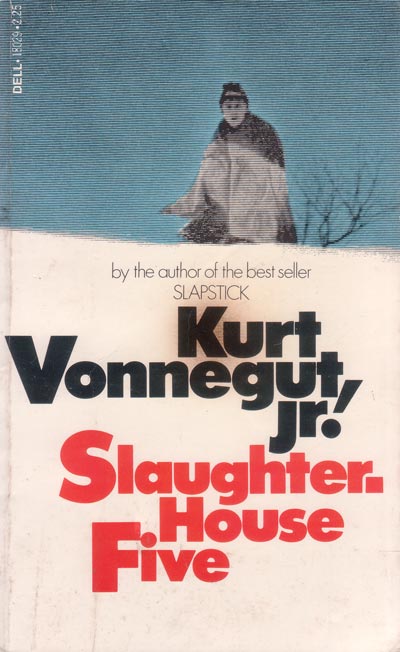
Slaughterhouse Five, by Kurt Vonnegut
Challenged in many communities, but burned in Drake, ND (1973). Banned in Rochester, MI because the novel "contains and makes references to religious matters" and thus fell within the ban of the establishment clause. An appellate court upheld its usage in the school in Todd v Rochester Community Schools, 41 Mich. App. 320, 200 N. W 2d 90 (1972). Banned in Levittown, NY (1975), North Jackson, OH (1979), and Lakeland, FL (1982) because of the "book's explicit sexual scenes, violence, and obscene language." Barred from purchase at the Washington Park High School in Racine, WI (1984) by the district administrative assistant for instructional services. Challenged at the Owensboro, KY High School library (1985) because of "foul language, a section depicting a picture of an act of bestiality, a reference to 'Magic Fingers' attached to the protagonist's bed to help him sleep, and the sentence: 'The gun made a ripping sound like the opening of the fly of God Almighty."' Restricted to students who have parental permission at the four Racine, WI Unified District high school libraries (1986) because of "language used in the book, depictions of torture, ethnic slurs, and negative portrayals of women." Challenged at the LaRue County, KY High School library (1987) because "the book contains foul language and promotes deviant sexual behavior.” Banned from the Fitzgerald, GA schools (1987) because it was filled with profanity and full of explicit sexual references:' Challenged in the Baton Rouge, LA public high school libraries (1988) because the book is "vulgar and offensive:' Challenged in the Monroe, MI public schools (1989) as required reading in a modem novel course for high school juniors and seniors because of the book's language and the way women are portrayed. Retained on the Round Rock, TX Independent High School reading list (1996) after a challenge that the book was too violent. Challenged as an eleventh grade summer reading option in Prince William County, VA (1998) because the book "was rife with profanity and explicit sex:" Removed as required reading for sophomores at the Coventry, RI High School (2000) after a parent complained that it contains vulgar language, violent imagery, and sexual content. Retained on the Northwest Suburban High School District 214 reading list in Arlington Heights, IL (2006), along with eight other challenged titles. A board member, elected amid promises to bring her Christian beliefs into all board decision-making, raised the controversy based on excerpts from the books she'd found on the internet. Challenged in the Howell, MI High School (2007) because of the book's strong sexual content. In response to a request from the president of the Livingston Organization for Values in Education, or LOVE, the county's top law enforcement official reviewed the books to see whether laws against distribution of sexually explicit materials to minors had been broken. "After reading the books in question, it is clear that the explicit passages illustrated a larger literary, artistic or political message and were not included solely to appeal to the prurient interests of minors," the county prosecutor wrote. "Whether these materials are appropriate for minors is a decision to be made by the school board, but I find that they are not in violation of criminal laws."
The Grapes of Wrath, by John Steinbeck
Burned by the East St. Louis, IL Public Library (1939) and barred from the Buffalo, NY Public Library (1939) on the grounds that "vulgar words" were used. Banned in Kansas City, MO (1939). Banned in Kern County CA, the scene of Steinbeck's novel (1939). Banned in Ireland (1953). On Feb. 21, 1973, eleven Turkish book publishers went on trial before an Istanbul martial law tribunal on charges of publishing, possessing and selling books in violation of an order of the Istanbul martial law command. They faced possible sentences of between one month's and six months' imprisonment "for spreading propaganda unfavorable to the state" and the confiscation of their books. Eight booksellers were also on trial with the publishers on the same charge involving The Grapes of Wrath. Banned in Kanawha, IA High School classes (1980). Challenged in Vernon Verona Sherill, NY School District (1980). Challenged as required reading for Richford, VT (1981) High School English students due to the book's language and portrayal of a former minister who recounts how he took advantage of a young woman. Banned in Morris, Manitoba, Canada (1982). Removed from two Anniston, Ala. high school libraries (1982), but later reinstated on a restrictive basis. Challenged at the Cummings High School in Burlington, NC (1986) as an optional reading assignment because the "book is full of filth. My son is being raised in a Christian home and this book takes the Lord's name in vain and has all kinds of profanity in it." Although the parent spoke to the press, a formal complaint with the school demanding the book's removal was not filed. Challenged at the Moore County school system in Carthage, NC (1986) because the book contains the phase "God damn." Challenged in the Greenville, SC schools (1991) because the book uses the name of God and Jesus in a "vain and profane manner along with inappropriate sexual references." Challenged in the Union City, TN High School classes (1993).
To Kill a Mockingbird, by Harper Lee
Challenged in Eden Valley, MN (1977) and temporarily banned due to words "damn" and "whore lady" used in the novel. Challenged in the Vernon Verona Sherill, NY School District (1980) as a "filthy, trashy novel." Challenged at the Warren, IN Township schools (1981) because the book does "psychological damage to the positive integration process" and "represents institutionalized racism under the guise of good literature." After unsuccessfully trying to ban Lee's novel, three black parents resigned from the township human relations advisory council. Challenged in the Waukegan, IL School District (1984) because the novel uses the word "nigger." Challenged in the Kansas City, MO junior high schools (1985). Challenged at the Park Hill, MO Junior High School (1985) because the novel "contains profanity and racial slurs." Retained on a supplemental eighth grade reading list in the Casa Grande, AZ Elementary School District (1985), despite the protests by black parents and the National Association for the Advancement of Colored People who charged the book was unfit for junior high use. Challenged at the Santa Cruz, CA Schools (1995) because of its racial themes. Removed from the Southwood High School Library in Caddo Parish, LA (1995) because the book's language and content were objectionable. Challenged at the Moss Point, MS School District (1996) because the novel contains a racial epithet. Banned from the Lindale, TX advanced placement English reading list (1996) because the book "conflicted with the values of the community." Challenged by a Glynn County, GA (2001) School Board member because of profanity. The novel was retained. Returned to the freshman reading list at Muskogee, OK High School (2001) despite complaints over the years from black students and parents about racial slurs in the text. Challenged in the Normal, IL Community High School's sophomore literature class (2003) as being degrading to African Americans. Challenged at the Stanford Middle School in Durham, NC (2004) because the 1961 Pulitzer Prize-winning novel uses the word "nigger." Challenged at the Brentwood, TN Middle School (2006) because the book contains “profanity” and “contains adult themes such as sexual intercourse, rape, and incest.” The complainants also contend that the book’s use of racial slurs promotes “racial hatred, racial division, racial separation, and promotes white supremacy.” Retained in the English curriculum by the Cherry Hill, NJ Board of Education (2007). A resident had objected to the novel’s depiction of how blacks are treated by members of a racist white community in an Alabama town during the Depression. The resident feared the book would upset black children reading it. Removed (2009) from the St. Edmund Campion Secondary School classrooms in Brampton Ontario, Canada because a parent objected to language used in the novel, including the word “nigger."
The Color Purple, by Alice Walker
Challenged as appropriate reading for Oakland, CA High School honors class (1984) due to the work's "sexual and social explicitness" and its "troubling ideas about race relations, man's relationship to God, African history, and human sexuality." After nine months of haggling and delays, a divided Oakland Board of Education gave formal approval for the book's use. Rejected for purchase by the Hayward, CA school's trustee (1985) because of "rough language" and "explicit sex scenes." Removed from the open shelves of the Newport News, VA school library (1986) because of its "profanity and sexual references" and placed in a special section accessible only to students over the age of 18 or who have written permission from a parent. Challenged at the public libraries of Saginaw, MI (1989) because it was “too sexually graphic for a 12-year-old.” Challenged as a summer youth program reading assignment in Chattanooga, TN (1989) because of its language and "explicitness." Challenged as an optional reading assigned in Ten Sleep, WY schools (1990). Challenged as a reading assignment at the New Burn, NC High School (1992) because the main character is raped by her stepfather. Banned in the Souderton, PA Area School District (1992) as appropriate reading for 10th graders because it is "smut." Challenged on the curricular reading list at Pomperaug High School in Southbury, CT (1995) because sexually explicit passages aren’t appropriate high school reading. Retained as an English course reading assignment in the Junction City, OR high school (1995) after a challenge to Walker's Pulitzer Prize-winning novel caused months of controversy. Although an alternative assignment was available, the book was challenged due to "inappropriate language, graphic sexual scenes, and book's negative image of black men." Challenged at the St. Johns County Schools in St. Augustine, FL (1995). Retained on the Round Rock, TX Independent High School reading list (1996) after a challenge that the book was too violent. Challenged, but retained, as part of the reading list for Advanced Placement English classes at Northwest High Schools in High Point, NC (1996). The book was challenged because it is "sexually graphic and violent." Removed from the Jackson County, WV school libraries (1997) along with sixteen other titles. Challenged, but retained as part of a supplemental reading list at the Shawnee School in Lima, OH (1999). Several parents described its content as vulgar and "X-rated." Removed from the Ferguson High School library in Newport News, VA (1999). Students may request and borrow the book with parental approval. Challenged, along with seventeen other titles in the Fairfax County, VA elementary and secondary libraries (2002), by a group called Parents Against Bad Books in Schools. The group contends the books "contain profanity and descriptions of drug abuse, sexually explicit conduct, and torture.” Challenged in Burke County (2008) schools in Morgantown, NC by parents concerned about the homosexuality, rape, and incest portrayed in the book.
Ulysses, by James Joyce
Burned in the U.S. (1918), Ireland (1922), Canada (1922), England (1923) and banned in England (1929).
Beloved, by Toni Morrison
Challenged at the St. Johns County Schools in St. Augustine, FL (1995). Retained on the Round Rock, TX Independent High School reading list (1996) after a challenge that the book was too violent. Challenged by a member of the Madawaska, ME School Committee (1997) because of the book's language. The 1987 Pulitzer Prize winning novel has been required reading for the advanced placement English class for six years. Challenged in the Sarasota County, FL schools (1998) because of sexual material. Retained on the Northwest Suburban High School District 214 reading listing in Arlington Heights, IL (2006), along with eight other challenged titles. A board member, elected amid promises to bring her Christian beliefs into all board decision-making, raised the controversy based on excerpts from the books she’d found on the Internet. Challenged in the Coeur d’Alene School District, ID (2007). Some parents say the book, along with five others, should require parental permission for students to read them. Pulled from the senior Advanced Placement (AP) English class at Eastern High School in Louisville, KY (2007) because two parents complained that the Pulitzer Prize-winning novel about antebellum slavery depicted the inappropriate topics of bestiality, racism, and sex. The principal ordered teachers to start over with The Scarlet Letter by Nathaniel Hawthorne in preparation for upcoming AP exams.
The Lord of the Flies, by William Golding
Challenged at the Dallas, TX Independent School District high school libraries (1974). Challenged at the Sully Buttes, SD High School (1981). Challenged at the Owen, NC High School (1981) because the book is "demoralizing inasmuch as it implies that man is little more than an animal." Challenged at the Marana, AZ High School (1983) as an inappropriate reading assignment. Challenged at the Olney, TX Independent School District (1984) because of "excessive violence and bad language." A committee of the Toronto, Canada Board of Education ruled on June 23, 1988, that the novel is "racist and recommended that it be removed from all schools." Parents and members of the black community complained about a reference to "niggers" in the book and said it denigrates blacks. Challenged in the Waterloo, IA schools (1992) because of profanity, lurid passages about sex, and statements defamatory to minorities, God, women and the disabled. Challenged, but retained on the ninth-grade accelerated English reading list in Bloomfield, NY (2000).
1984, by George Orwell
Challenged in the Jackson County, FL (1981) because Orwell's novel is "pro-communist and contained explicit sexual matter."
Lolita, by Vladimir Nabokov
Banned as obscene in France (1956-1959), in England (1955-59), in Argentina (1959), and in New Zealand (1960). The South African Directorate of Publications announced on November 27, 1982, that Lolita has been taken off the banned list, eight years after a request for permission to market the novel in paperback had been refused. Challenged at the Marion-Levy Public Library System in Ocala, FL (2006). The Marion County commissioners voted to have the county attorney review the novel that addresses the themes of pedophilia and incest, to determine if it meets the state law’s definition of “unsuitable for minors.”
Of Mice and Men, by John Steinbeck
Banned in Ireland (1953); Syracuse, IN (1974); Oil City, PA (I977); Grand Blanc, MI (1979); Continental, OH (1980) and other communities. Challenged in Greenville, SC (1977) by the Fourth Province of the Knights of the Ku Klux KIan; Vernon Verona Sherill, NY School District (1980); St. David, AZ (1981) and Tell City, IN (1982) due to "profanity and using God's name in vain." Banned from classroom use at the Scottsboro, AL Skyline High School (1983) due to "profanity." The Knoxville, TN School Board chairman vowed to have "filthy books" removed from Knoxville's public schools (1984) and picked Steinbeck's novel as the first target due to "its vulgar language." Reinstated at the Christian County, KY school libraries and English classes (1987) after being challenged as vulgar and offensive. Challenged in the Marion County, WV schools (1988), at the Wheaton Warrenville, IL Middle School (1988), and at the Berrien Springs, MI High School (1988) because the book contains profanity. Removed from the Northside High School in Tuscaloosa, AL (1989) because the book "has profane use of God's name." Challenged as a summer youth program reading assignment in Chattanooga, TN (1989) because "Steinbeck is known to have had an anti business attitude." In addition, "he was very questionable as to his patriotism." Removed from all reading lists and collected at the White Chapel High School in Pine Bluff, AR (1989) because of objections to language. Challenged as appropriate for high school reading lists in the Shelby County, TN school system (1989) because the novel contains "offensive language." Challenged, but retained in a Salina, KS (1990) tenth grade English class despite concerns that it contains "profanity" and "takes the Lord's name in vain." Challenged by a Fresno, CA (1991) parent as a tenth grade English college preparatory curriculum assignment, citing profanity" and "racial slurs." The book was retained, and the child of the objecting parent was provided with an alternative reading assignment. Challenged in the Rivera, TX schools (1990) because it contains profanity. Challenged as curriculum material at the Ringgold High School in Carroll Township, PA (1991) because the novel contains terminology offensive to blacks. Removed and later returned to the Suwannee, FL High School library (1991) because the book is "indecent" Challenged at the Jacksboro, TN High School (1991) because the novel contains "blasphemous" language, excessive cursing, and sexual overtones. Challenged as required reading in the Buckingham County, VA schools (1991) because of profanity. In 1992 a coalition of community members and clergy in Mobile, AL requested that local school officials form a special textbook screening committee to "weed out objectionable things." Steinbeck's novel was the first target because it contains "profanity" and "morbid and depressing themes." Temporarily removed from the Hamilton, OH High School reading list (1992) after a parent complained about its vulgarity and racial slurs. Challenged in the Waterloo, IA schools (1992) and the Duval County, FL public school libraries (1992) because of profanity, lurid passages about sex, and statements defamatory to minorities, God, women, and the disabled. Challenged at the Modesto, CA High School as recommended reading (1992) because of "offensive and racist language." The word "nigger" appears in the book. Challenged at the Oak Hill High School in Alexandria, LA (1992) because of profanity. Challenged as an appropriate English curriculum assignment at the Mingus, AZ Union High School (1993) because of "profane language, moral statement, treatment of the retarded, and the violent ending." Pulled from a classroom by the Putnam County, TN school superintendent (1994) "due to the language." Later, after discussions with the school district counsel, it was reinstated. The book was challenged in the Loganville, GA High School (1994) because of its "vulgar language throughout." Challenged in the Galena, KS school library (1995) because of the book's language and social implications. Retained in the Bemidji, MN schools (1995) after challenges to the book's "objectionable" language. Challenged at the Stephens County High School library in Toccoa, GA (I995) because of "curse words." The book was retained. Challenged, but retained in a Warm Springs, VA High School (1995) English class. Banned from the Washington Junior High School curriculum in Peru, IL (1997) because it was deemed "age inappropriate." Challenged, but retained, in the Louisville, OH high school English classes (1997) because of profanity. Removed, restored, restricted, and eventually retained at the Bay County schools in Panama City, FL (1997). A citizen group, the 100 Black United, Inc., requested the novel's removal and "any other inadmissible literary books that have racial slurs in them, such as the using of the word 'Nigger.'" Challenged as a reading list assignment for a ninth grade literature class, but retained at the Sauk Rapids Rice High School in St. Cloud, MN (1997). A parent complained that the book's use of racist language led to racist behavior and racial harassment. Challenged in O'Hara Park Middle School classrooms in Oakley, CA (1998) because it contains racial epithets. Challenged, but retained, in the Bryant, AR school library (1998) because of a parent's complaint that the book "takes God's name in vain 15 times and uses Jesus's name lightly." Challenged at the Barron, WI School District (1998). Challenged, but retained in the sophomore curriculum at West Middlesex, PA High School (1999) despite objections to the novel's profanity. Challenged in the Tomah, WI School District (1999) because the novel is violent and contains obscenities. Challenged as required reading at the high school in Grandville, MI (2002) because the book "is full of racism, profanity, and foul language." Banned from the George County, MS schools (2002) because of profanity. Challenged in the Normal, IL Community High Schools (2003) because the books contains "racial slurs, profanity, violence, and does not represent traditional values." An alternative book, Steinbeck's The Pearl, was offered but rejected by the family challenging the novel. The committee then recommended The House on Mango Street and The Way to Rainy Mountain as alternatives. Retained in the Greencastle-Antrim, PA (2006) tenth-grade English classes. A complaint was filed because of “racial slurs” and profanity used throughout the novel. The book has been used in the high school for more than thirty years, and those who object to its content have the option of reading an alternative reading. Challenged at the Newton, IA High School (2007) because of concerns about profanity and the portrayal of Jesus Christ. Newton High School has required students to read the book since at least the early 1980s. In neighboring Des Moines, it is on the recommended reading list for ninth-grade English, and it is used for some special education students in the eleventh and twelfth grades. Retained in the Olathe, KS ninth grade curriculum (2007) despite a parent calling the novel a “worthless, profanity-riddled book” which is “derogatory towards African Americans, women, and the developmentally disabled.”
Catch-22, by Joseph Heller
Banned in Strongsville, OH (1972), but the school board's action was overturned in 1976 by a U.S. District Court in Minarcini v. Strongsville City School District. Challenged at the Dallas, TX Independent School District high school libraries (1974); in Snoqualmie, WA (1979) because of its several references to women as "whores."
Brave New World, by Aldous Huxley
Banned in Ireland (1932). Removed from classrooms in Miller, MO (1980), because it makes promiscuous sex "look like fun." Challenged frequently throughout the U.S.as required reading. Challenged as required reading at the Yukon, OK High School (1988) because of "the book's language and moral content." Challenged as required reading in the Corona-Norco, CA Unified School District (1993) because it is "centered around negative activity." Specifically, parents objected that the characters' sexual behavior directly opposed the health curriculum, which taught sexual abstinence until marriage. The book was retained, and teachers selected alternatives if students object to Huxley's novel. Removed from the Foley, AL High School Library (2000) pending review, because a parent complained that its characters showed contempt for religion, marriage, and family. The parent complained to the school and to Alabama Governor Don Siegelman. Challenged, but retained in the South Texas Independent School District in Mercedes, TX (2003). Parents objected to the adult themes—sexuality, drugs, suicide—that appeared in the novel. Huxley's book was part of the summer Science Academy curriculum. The board voted to give parents more control over their children's choices by requiring principals to automatically offer an alternative to a challenged book. Retained in the Coeur D’Alene, ID School District (2008) despite objections that the book has too many references to sex and drug use.
Animal Farm, by George Orwell
A Wisconsin survey revealed in 1963 that the John Birch Society had challenged the novel's use; it objected to the words "masses will revolt." In 1968, the New York State English Council's Committee on Defense Against Censorship conducted a comparable study in New York State English classrooms. Its findings identified the novel on its list of "problem books"; the reason cited was that "Orwell was a communist." Suppressed from being displayed at the 1977 Moscow, Russia International Book Fair. A survey of censorship challenges in the schools, conducted in DeKalb County for the period of 1979 to 1982, revealed that the novel had been objected to for its political theories. Banned from Bay County's four middle schools and three high schools in Panama City, FL by the Bay County school superintendent in 1987. After 44 parents filed a suit against the district claiming that its instructional aids policy denies constitutional rights, the Bay County School Board reinstated the book, along with sixty-four others banned. Banned from schools in the United Arab Emirates, along with 125 others in 2002. The Ministry of Education banned it on the grounds that it contains written or illustrated material that contradicts Islamic and Arab values—in this text, pictures of alcoholic drinks, pigs, and other "indecent images."
The Sun Also Rises, by Ernest Hemingway
Banned in Boston, MA (1930), Ireland (1953), Riverside, CA (1960), San Jose, CA (1960). Burned in Nazi bonfires in Germany (1933).
As I Lay Dying, by William Faulkner
Banned in the Graves County School District in Mayfield, KY (1986) because it contains "offensive and obscene passages referring to abortion and used God's name in vain." The decision was reversed a week later after intense pressure from the ACLU and considerable negative publicity. Challenged as a required reading assignment in an advanced English class of Pulaski County High School in Somerset, KY (1987) because the book contains "profanity and a segment about masturbation." Challenged, but retained, in the Carroll County, MD schools (1991). Two school board members were concerned about the book's coarse language and dialect. Banned at Central High School in Louisville, KY (1994) temporarily because the book uses profanity and questions the existence of God.
A Farewell to Arms, by Ernest Hemingway
The June 1929 issue of Scribner's Magazine, which ran Hemingway's novel, was banned in Boston, MA (1929). Banned in Italy (1929) because of its painfully accurate account of the Italian retreat from Caporetto, Italy. Burned by the Nazis in Germany (1933). Banned in Ireland (1939). Challenged at the Dallas, TX Independent School District high school libraries (1974). Challenged at the Vernon-Verona-Sherill, NY School District (1980) as a "sex novel."
Their Eyes Were Watching God, by Zora Neale Hurston
Challenged for sexual explicitness, but retained on the Stonewall Jackson High School's academically advanced reading list in Brentsville, VA (1997). A parent objected to the novel's language and sexual explicitness.
Invisible Man, by Ralph Ellison
Excerpts banned in Butler, PA (1975). Removed from the high school English reading list in St. Francis, WI (1975). Retained in the Yakima, WA schools (1994) after a five-month dispute over what advanced high school students should read in the classroom. Two parents raised concerns about profanity and images of violence and sexuality in the book and requested that it be removed from the reading list.
Song of Solomon, by Toni Morrison
Challenged, but retained, in the Columbus, OH schools (1993). The complainant believed that the book contains language degrading to blacks, and is sexually explicit. Removed from required reading lists and library shelves in the Richmond County, GA. School District (1994) after a parent complained that passages from the book are "filthy and inappropriate." Challenged at the St. Johns County Schools in St. Augustine, FL (1995). Removed from the St. Mary's County, MD schools' approved text list (1998) by the superintendent, overruling a faculty committee recommendation. Complainants referred to the novel as "filth," "trash," and "repulsive." Reinstated in the Shelby, MI school Advanced Placement English curriculum (2009), but parents are to be informed in writing and at a meeting about the book’s content. Students not wanting to read the book can choose an alternative without academic penalty. The superintendent had suspended the book from the curriculum.
Gone with the Wind, by Margaret Mitchell
Banned from Anaheim, CA Union High School District English classrooms (1978). Challenged in Waukegan, IL School District (1984) because the novel uses the word "nigger."
Native Son, by Richard Wright
Challenged in Goffstown, NH (1978); Elmwood Park, NJ (1978) due to "objectionable" language; and North Adams, MA (1981) due to the book's "violence, sex, and profanity." Challenged at the Berrian Springs, MI High School in classrooms and libraries (1988) because the novel is "vulgar, profane, and sexually explicit." Retained in the Yakima, WA schools (1994) after a five-month dispute over what advanced high school students should read in the classroom. Two parents raised concerns about profanity and images of violence and sexuality in the book and requested that it be removed from the reading list. Challenged as part of the reading list for Advanced Placement English classes at Northwest High School in High Point, NC (1996). The book was challenged because it is "sexually graphic and violent." Removed from Irvington High School in Fremont, CA (1998) after a few parents complained the book was unnecessarily violent and sexually explicit. Challenged in the Hamilton High School curriculum in Fort Wayne, IN (1998) because of the novel's graphic language and sexual content.
One Flew Over the Cuckoo's Nest, by Ken Kesey
Challenged in the Greeley, CO public school district (1971) as a non-required American Culture reading. In 1974, five residents of Strongsville, OH, sued the board of education to remove the novel. Labeling it "pornographic," they charged the novel "glorifies criminal activity, has a tendency to corrupt juveniles and contains descriptions of bestiality, bizarre violence, and torture, dismemberment, death, and human elimination." Removed from public school libraries in Randolph, NY, and Alton, OK (1975). Removed from the required reading list in Westport, MA (1977). Banned from the St. Anthony, ID Freemont High School classrooms (1978) and the instructor fired. The teacher sued. A decision in the case—Fogarty v. Atchley—was never published. Challenged at the Merrimack, NH High School (1982). Challenged as part of the curriculum in an Aberdeen, WA High School honors English class (1986) because the book promotes "secular humanism." The school board voted to retain the title. Challenged at the Placentia-Yorba Linda, CA Unified School District (2000) after complaints by parents stated that teachers "can choose the best books, but they keep choosing this garbage over and over again."
For Whom the Bell Tolls, by Ernest Hemingway
Declared non-mailable by the U.S. Post Office (1940). On Feb. 21, 1973, eleven Turkish book publishers went on trial before an Istanbul martial law tribunal on charges of publishing, possessing, and selling books in violation of an order of the Istanbul martial law command. They faced possible sentences of between one month's and six months’ imprisonment "for spreading propaganda unfavorable to the state" and the confiscation of their books. Eight booksellers also were on trial with the publishers on the same charge involving For Whom the Bell Tolls.
The Call of the Wild, by Jack London
Banned in Italy (1929), Yugoslavia (1929), and burned in Nazi bonfires (1933).
Go Tell It on the Mountain, by James Baldwin
Challenged as required reading in the Hudson Falls, NY schools (1994) because the book has recurring themes of rape, masturbation, violence, and degrading treatment of women. Challenged as a ninth-grade summer reading option in Prince William County, VA (1988) because the book is "rife with profanity and explicit sex."
All the King's Men, by Robert Penn Warren
Challenged at the Dallas, TX Independent School District high school libraries (1974).
The Lord of the Rings, by J.R.R. Tolkien
Burned in Alamagordo, NM (2001) outside Christ Community Church along with other Tolkien novels as satanic.
The Jungle, by Upton Sinclair
Banned from public libraries in Yugoslavia (1929). Burned in the Nazi bonfires because of Sinclair's socialist views (1933). Banned in East Germany (1956) as inimical to communism. Banned in South Korea (1985).
Lady Chatterley's Lover, by D.H. Lawrence
Banned by U.S. Customs (1929). Banned in Ireland (1932), Poland (1932), Australia (1959), Japan (1959), India (1959). Banned in Canada (1960) until 1962. Dissemination of Lawrence’s novel has been stopped in China (1987) because the book “will corrupt the minds of young people and is also against the Chinese tradition.”
A Clockwork Orange, by Anthony Burgess
In 1973 a bookseller in Orem, UT was arrested for selling the novel. Charges were later dropped, but the book seller was forced to close the store and relocate to another city. Removed from Aurora, CO high school (1976) due to "objectionable" language and from high school classrooms in Westport, MA (1977) because of "objectionable" language. Removed from two Anniston, AL High school libraries (1982), but later reinstated on a restricted basis.
The Awakening, by Kate Chopin
Retained on the Northwestern Suburban High School District 214 reading list in Arlington Heights, IL along with eight other challenged titles in 2006. A board member, elected amid promises to bring her Christian beliefs into all board decision-making, raised the controversy based on excerpts from the books she'd found on the Internet. First published in 1899, this novel so disturbed critics and the public that it was banished for decades afterward.
In Cold Blood, by Truman Capote
Banned, but later reinstated after community protests at the Windsor Forest High School in Savannah, GA (2000). The controversy began in early 1999 when a parent complained about sex, violence, and profanity in the book that was part of an Advanced Placement English Class.
Satanic Verses, by Salman Rushdie
Banned in Pakistan, Saudi Arabia, Egypt, Somalia, Sudan, Bangladesh, Malaysia, Quatar, Indonesia, South Africa, and India because of its criticism of Islam. Burned in West Yorkshire, England (1989) and temporarily withdrawn from two bookstores on the advice of police who took threats to staff and property seriously. In Pakistan five people died in riots against the book. Another man died a day later in Kashmir. Ayatollah Khomeni issued a fatwa or religious edict, stating, "I inform the proud Muslim people of the world that the author of the Satanic Verses, which is against Islam, the prophet, and the Koran, and all those involved in its publication who were aware of its content, have been sentenced to death." Challenged at the Wichita, KS Public Library (1989) because the book is "blasphemous to the prophet Mohammed." In Venezuela, owning or reading it was declared a crime under penalty of 15 months' imprisonment. In Japan, the sale of the English-language edition was banned under the threat of fines. The governments of Bulgaria and Poland also restricted its distribution. In 1991, in separate incidents, Hitoshi Igarashi, the Japanese translator, was stabbed to death and its Italian translator, Ettore Capriolo, was seriously wounded. In 1993 William Nygaard, its Norwegian publisher, was shot and seriously injured.
Sophie's Choice, by William Styron
Banned in South Africa in 1979. Returned to La Mirada High School library (CA) in 2002 after a complaint about its sexual content prompted the school to pull the award-winning novel about a tormented Holocaust survivor.
Sons and Lovers, by D.H. Lawrence
In 1961 an Oklahoma City group called Mothers United for Decency hired a trailer, dubbed it "smutmobile," and displayed books deemed objectionable, including Lawrence's novel.
Cat's Cradle, by Kurt Vonnegut
The Strongsville, Ohio School Board (1972) voted to withdraw this title from the school library; this action was overturned in 1976 by a U.S. District Court in Minarcini v. Strongsville City School District, 541 F. 2d 577 (6th Cir. 1976). Challenged at Merrimack, NH High School (1982).
A Separate Peace, by John Knowles
Challenged in Vernon-Verona-Sherill, NY School District (1980) as a "filthy, trashy sex novel." Challenged at the Fannett-Metal High School in Shippensburg, PA (1985) because of its allegedly offensive language. Challenged as appropriate for high school reading lists in the Shelby County, TN school system (1989) because the novel contains "offensive language." Challenged, but retained in the Champaign, IL high school English classes (1991) despite claims that “unsuitable language” makes it inappropriate. Challenged by the parent of a high school student in Troy, IL (1991) citing profanity and negative attitudes. Students were offered alternative assignments while the school board took the matter under advisement, but no further action was taken on the complaint. Challenged at the McDowell County, NC schools (1996) because of "graphic language."
Naked Lunch, by William S. Burroughs
Found obscene in Boston, MA Superior Court (1965). The finding was reversed by the State Supreme Court the following year.
Brideshead Revisited, by Evelyn Waugh
Alabama Representative Gerald Allen (R-Cottondale) proposed legislation that would prohibit the use of public funds for the "purchase of textbooks or library materials that recognize or promote homosexuality as an acceptable lifestyle." The bill also proposed that novels with gay protagonists and college textbooks that suggest homosexuality is natural would have to be removed from library shelves and destroyed. The bill would impact all Alabama school, public, and university libraries. While it would ban books like Heather Has Two Mommies, it could also include classic and popular novels with gay characters such as Brideshead Revisited, The Color Purple or The Picture of Dorian Gray (2005).
Women in Love, by DH Lawrence
Seized by John Summers of the New York Society for the Suppression of Vice and declared obscene (1922).
The Naked and the Dead, by Norman Mailer
Banned in Canada (1949) and Australia (1949).
Tropic of Cancer, by Henry Miller
Banned from U.S. Customs (1934). The U.S. Supreme Court found the novel not obscene (1964). Banned in Turkey (1986).
An American Tragedy, by Theodore Dreiser
Banned in Boston, MA (1927) and burned by the Nazis in Germany (1933) because it "deals with low love affairs."
Rabbit, Run, by John Updike
Banned in Ireland in 1962 because the Irish Board of Censors found the work "obscene" and "indecent," objecting particularly to the author's handling of the characters' sexuality, the "explicit sex acts" and "promiscuity." The work was officially banned from sales in Ireland until the introduction of the revised Censorship Publications Bill in 1967. Restricted to high school students with parental permission in the six Aroostock County, ME community high school libraries (1976) because of passages in the book dealing with sex and an extramarital affair. Removed from the required reading list for English class at the Medicine Bow, WY Junior High School (1986) because of sexual references and profanity in the book.
My brother Dimas -his dad was the second son of my grandmother in which my mom was the seventh daughter, godspeed mom- set up this website where he sells T-shirts online with words of wisdom in it..
I can't help but ponder at how cool the idea was. Who wouldn't want a shirt with their preferred quotations packed in awesome design at affordable price?!
the best thing is, he claimed to donate 100 percent - I like putting 100 percent instead of 'all', for me it feels to have a greater depth of valuation to it, I guess, or is it just me?- to charity!
and this is the next best thing, in order to convince you that he's actually donating all of the profit, he will give a periodical financial reports on the website to visibly show which places are receiving the donations, how much they receive, and what are they using the donations for.
I'm lost for words..
I have always believe that it requires one hell of courage, utmost determination and unbelievably kind heart to be able to do stuff that my brother is doing. It apparently takes ingenuity too..
I have always thought that suddenly the world is a less interesting place after my mom's departure, I guess life has its own sparks..
kudos to my bro and these are some of his cool T-Shirts,
Just got myself a new daypack -which apparently is the cool term for your everyday back pack- and decided to give my 2 cents on the product.
Anyways, this is how it looks with proper lights and professional placement (I don't know how Deuter can always seem to inflate their backpacks like balloons).
As you can see, it has a nice green color which I really dig -what can I say, I'm a sucker for everything green- and it's not too big or too small for a working daypack. Yes, I use it primarily for work. I use another cool carrier -which apparently is the cool term for your travelling, hiking, overseas tramping trips- by Deuter, the Futura Pro 38, but let's keep the focus on the Tension for now.
First, the reason why I pick Deuter and not other brands, or other laptop dedicated bags, is because, well, laptop bags aren't really that comfortable in my back. I have about three and all of them feels like a huge hump that press my shoulders down even after walking around for less than 20 minutes. And as the nature of my job requires constant movements from one place to another, why not pick something with good shoulder padding and back system.
And Deuter was actually not my first option, I was browsing for, well, brands like Vaude -there's this really cool green vaude on their website, Karrimor -which also have a most wanted item whose name I forgot, and The North Face -though some are available, they normally come in boring black color, which in my case, attracts more mosquitoes.
But my eyes stuck on Deuter because their products are easier to find at highly bargained prices in Indonesia, in which the aforementioned brands are not. recommended sellers at Kaskus have always been my last resort.
enough talk and get on with the review. Despite the cool looking backpack you see on top, this is how mine's looked with nothing in it.
And this is the back system I mentioned before (click on image for bigger view).
I have to say that it's not working as I expected it would. Though I feel both back pads pressing on my back, my reflect constantly forced me to fix the adjustments of both the right and left shoulder cords so that both pads fall perfectly on the sides. I would have preferred a single pad on the back bone, as I constantly have a backbone problem, but that's probably just me.
I still sweat, but not as much I guess.
And there's also the chest cord which I don't particularly use, and the bag also come with detachable hip cords, which I detached to slip the dangling shoulder cords in
Now moving on to the compartments
The bag has a small upper pocket that can hold your keys -with dangling key cord, itsy bitsy things like identification cards, possibly earphones, cigarettes and lighters, whatever small things you want easy access to.
these are the two side pockets
this one has tons of pen holders, which is kindda cool -you'll know why later, and quite a space for anything else, like small size notebook and stuff.
The one on the left is made of an elastic material, which you'll probably missed on the images at the company's website. This means the right and left pockets are dissimilar in terms of design, with the left meant to stretch to hold something bigger, such as water bottles, or in my case, my box of name cards.
Peeking at the main compartment,
there's a small zipped bag that can hold small and not too thick notes. Stuff like passports, your bankbooks and other of similar sizes should fit in this pocket. Though connecting cables for electronic devices can also fit here, I found it annoying to do so as it will block my access to the main compartment.
the inside compartment has an attached line of cloth that, I guess, were meant to hold your wet clothes. The design also meant for things to stay at the edge of the wall of the bag so that the things you put inside won't dangle you down on the opposite direction. Plenty of bags have this feature, so I guess you know what I'm talking about. This is where I put my laptop in. The absence of a dedicated laptop compartment, in my opinion, is forgivable, as it was never meant to be a laptop bag in the first place. I would advice for a laptop soft case if you want to mount your laptop in at the expense of less space, but I'm doing just fine without one :p.
I don't know whether 20 liter is the over all size or after the bag is shrunk. I'm saying this because the bag has an outside zipper that can give additional space for the inside compartment. With the load I'm carrying right now, I found it unnecessary to expand the main compartment, but it's good to know that I can if I need to.
This is the outside of the bag, which according to the Deuter website could (or should?) hold your skateboard in case you want to walk or run instead of glide. I haven't tried mounting a helmet in, which is partially one of the reasons why I bought this series instead the spider, which also look cool by the way, but the long connecting cords should do it, I guess, I don't really know, will update you if I finally mount something in it, if by chance I remembered to take pictures of it. You should see as I don't really like dangling cords on my bag, I kindda tighten them using plastic tighteners -whatever the cool term for it. They's the same cable tighteners available in different colors at your local utility shops.
The bag also has a glow-in-the-dark stripe that will prevent you from getting hit from behind if you're riding a bike or walking on the wrong side of a sidewalk-less street, which is a lot in Jakarta.
Now that I have covered, I guess, all parts of the bag that need to be covered.
Here are the things I carry everyday to work, -14 inch laptop from Toshiba -my 500GB shock proof, supposedly, portable hardisk from Transcends -itsy bitsy stuff like bunch of pens, toothbrush -shut up, lighter, portable ashtray, back up Senheisser earphones, press id -slightly bigger stuff like notebook, passport and a couple of bankbooks -box of namecard -bunch of cable connection for charging electrical equipment, such as the shitty laptop charger -due to its weight and size, iPod cable, blackberry cable and hardisk connector. -and finally a spare shirt in case I need to look neat pronto
just to show you the capacity of this bag, I have decided to include the ultra-thick Steve Jobs biography -may he rest in iPeace- by Walter Issacson inside the bag.
and now it's time to put everything inside, okay this one over here, that one over there, some of this stuff here, and, wait, yup.. okay and VOILA!!
This is how the bag looks after everything is clobbered in, also see the side pics to compare the thickness (click for larger view).
Just to give you an idea about the dimension of the bag, this is my son Kaezee next to the Tension -or simply because the purpose of this review is to make my son famous :p
here's pros and cons
pros -green colored (the black stripe is also available btw) -nice padded and wide shoulder strap -big enough but not overly humongous for my back, appealing design -I heard the bag is water proof :p
cons -the back system I mentioned above -lack of dedicated laptop container but okay laa -placing of inside pocket that can block the way (I later see this as a good thing, as the bag doesn't necessarily weigh everything to the bottom part. Bag contents are evenly distributed on the upper and bottom parts to maintain its cool proportional shape, so it goes).
Overall I'm pretty happy with the bag as it answers my need for a hip-looking work daypack. And though the amount of things inside is similar to the amount of things mounted on my normal laptop bag, my shoulders receive less strain due to the width of the pad, and my back don't sweat as much.
Here's me looking happy
(mm probably later)
I am honored to be with you today at your commencement from one of the finest universities in the world. I never graduated from college. Truth be told, this is the closest I've ever gotten to a college graduation. Today I want to tell you three stories from my life. That's it. No big deal. Just three stories.
The first story is about connecting the dots.
I dropped out of Reed College after the first 6 months, but then stayed around as a drop-in for another 18 months or so before I really quit. So why did I drop out?
It started before I was born. My biological mother was a young, unwed college graduate student, and she decided to put me up for adoption. She felt very strongly that I should be adopted by college graduates, so everything was all set for me to be adopted at birth by a lawyer and his wife. Except that when I popped out they decided at the last minute that they really wanted a girl. So my parents, who were on a waiting list, got a call in the middle of the night asking: "We have an unexpected baby boy; do you want him?" They said: "Of course." My biological mother later found out that my mother had never graduated from college and that my father had never graduated from high school. She refused to sign the final adoption papers. She only relented a few months later when my parents promised that I would someday go to college.
And 17 years later I did go to college. But I naively chose a college that was almost as expensive as Stanford, and all of my working-class parents' savings were being spent on my college tuition. After six months, I couldn't see the value in it. I had no idea what I wanted to do with my life and no idea how college was going to help me figure it out. And here I was spending all of the money my parents had saved their entire life. So I decided to drop out and trust that it would all work out OK. It was pretty scary at the time, but looking back it was one of the best decisions I ever made. The minute I dropped out I could stop taking the required classes that didn't interest me, and begin dropping in on the ones that looked interesting.
It wasn't all romantic. I didn't have a dorm room, so I slept on the floor in friends' rooms, I returned coke bottles for the 5¢ deposits to buy food with, and I would walk the 7 miles across town every Sunday night to get one good meal a week at the Hare Krishna temple. I loved it. And much of what I stumbled into by following my curiosity and intuition turned out to be priceless later on. Let me give you one example:
Reed College at that time offered perhaps the best calligraphy instruction in the country. Throughout the campus every poster, every label on every drawer, was beautifully hand calligraphed. Because I had dropped out and didn't have to take the normal classes, I decided to take a calligraphy class to learn how to do this. I learned about serif and san serif typefaces, about varying the amount of space between different letter combinations, about what makes great typography great. It was beautiful, historical, artistically subtle in a way that science can't capture, and I found it fascinating.
None of this had even a hope of any practical application in my life. But ten years later, when we were designing the first Macintosh computer, it all came back to me. And we designed it all into the Mac. It was the first computer with beautiful typography. If I had never dropped in on that single course in college, the Mac would have never had multiple typefaces or proportionally spaced fonts. And since Windows just copied the Mac, it's likely that no personal computer would have them. If I had never dropped out, I would have never dropped in on this calligraphy class, and personal computers might not have the wonderful typography that they do. Of course it was impossible to connect the dots looking forward when I was in college. But it was very, very clear looking backwards ten years later.
Again, you can't connect the dots looking forward; you can only connect them looking backwards. So you have to trust that the dots will somehow connect in your future. You have to trust in something — your gut, destiny, life, karma, whatever. This approach has never let me down, and it has made all the difference in my life.
My second story is about love and loss.
I was lucky — I found what I loved to do early in life. Woz and I started Apple in my parents garage when I was 20. We worked hard, and in 10 years Apple had grown from just the two of us in a garage into a $2 billion company with over 4000 employees. We had just released our finest creation — the Macintosh — a year earlier, and I had just turned 30. And then I got fired. How can you get fired from a company you started? Well, as Apple grew we hired someone who I thought was very talented to run the company with me, and for the first year or so things went well. But then our visions of the future began to diverge and eventually we had a falling out. When we did, our Board of Directors sided with him. So at 30 I was out. And very publicly out. What had been the focus of my entire adult life was gone, and it was devastating.
I really didn't know what to do for a few months. I felt that I had let the previous generation of entrepreneurs down - that I had dropped the baton as it was being passed to me. I met with David Packard and Bob Noyce and tried to apologize for screwing up so badly. I was a very public failure, and I even thought about running away from the valley. But something slowly began to dawn on me — I still loved what I did. The turn of events at Apple had not changed that one bit. I had been rejected, but I was still in love. And so I decided to start over.
I didn't see it then, but it turned out that getting fired from Apple was the best thing that could have ever happened to me. The heaviness of being successful was replaced by the lightness of being a beginner again, less sure about everything. It freed me to enter one of the most creative periods of my life.
During the next five years, I started a company named NeXT, another company named Pixar, and fell in love with an amazing woman who would become my wife. Pixar went on to create the worlds first computer animated feature film, Toy Story, and is now the most successful animation studio in the world. In a remarkable turn of events, Apple bought NeXT, I returned to Apple, and the technology we developed at NeXT is at the heart of Apple's current renaissance. And Laurene and I have a wonderful family together.
I'm pretty sure none of this would have happened if I hadn't been fired from Apple. It was awful tasting medicine, but I guess the patient needed it. Sometimes life hits you in the head with a brick. Don't lose faith. I'm convinced that the only thing that kept me going was that I loved what I did. You've got to find what you love. And that is as true for your work as it is for your lovers. Your work is going to fill a large part of your life, and the only way to be truly satisfied is to do what you believe is great work. And the only way to do great work is to love what you do. If you haven't found it yet, keep looking. Don't settle. As with all matters of the heart, you'll know when you find it. And, like any great relationship, it just gets better and better as the years roll on. So keep looking until you find it. Don't settle.
My third story is about death.
When I was 17, I read a quote that went something like: "If you live each day as if it was your last, someday you'll most certainly be right." It made an impression on me, and since then, for the past 33 years, I have looked in the mirror every morning and asked myself: "If today were the last day of my life, would I want to do what I am about to do today?" And whenever the answer has been "No" for too many days in a row, I know I need to change something.
Remembering that I'll be dead soon is the most important tool I've ever encountered to help me make the big choices in life. Because almost everything — all external expectations, all pride, all fear of embarrassment or failure - these things just fall away in the face of death, leaving only what is truly important. Remembering that you are going to die is the best way I know to avoid the trap of thinking you have something to lose. You are already naked. There is no reason not to follow your heart.
About a year ago I was diagnosed with cancer. I had a scan at 7:30 in the morning, and it clearly showed a tumor on my pancreas. I didn't even know what a pancreas was. The doctors told me this was almost certainly a type of cancer that is incurable, and that I should expect to live no longer than three to six months. My doctor advised me to go home and get my affairs in order, which is doctor's code for prepare to die. It means to try to tell your kids everything you thought you'd have the next 10 years to tell them in just a few months. It means to make sure everything is buttoned up so that it will be as easy as possible for your family. It means to say your goodbyes.
I lived with that diagnosis all day. Later that evening I had a biopsy, where they stuck an endoscope down my throat, through my stomach and into my intestines, put a needle into my pancreas and got a few cells from the tumor. I was sedated, but my wife, who was there, told me that when they viewed the cells under a microscope the doctors started crying because it turned out to be a very rare form of pancreatic cancer that is curable with surgery. I had the surgery and I'm fine now.
This was the closest I've been to facing death, and I hope it's the closest I get for a few more decades. Having lived through it, I can now say this to you with a bit more certainty than when death was a useful but purely intellectual concept:
No one wants to die. Even people who want to go to heaven don't want to die to get there. And yet death is the destination we all share. No one has ever escaped it. And that is as it should be, because Death is very likely the single best invention of Life. It is Life's change agent. It clears out the old to make way for the new. Right now the new is you, but someday not too long from now, you will gradually become the old and be cleared away. Sorry to be so dramatic, but it is quite true.
Your time is limited, so don't waste it living someone else's life. Don't be trapped by dogma — which is living with the results of other people's thinking. Don't let the noise of others' opinions drown out your own inner voice. And most important, have the courage to follow your heart and intuition. They somehow already know what you truly want to become. Everything else is secondary.
When I was young, there was an amazing publication called The Whole Earth Catalog, which was one of the bibles of my generation. It was created by a fellow named Stewart Brand not far from here in Menlo Park, and he brought it to life with his poetic touch. This was in the late 1960's, before personal computers and desktop publishing, so it was all made with typewriters, scissors, and polaroid cameras. It was sort of like Google in paperback form, 35 years before Google came along: it was idealistic, and overflowing with neat tools and great notions.
Stewart and his team put out several issues of The Whole Earth Catalog, and then when it had run its course, they put out a final issue. It was the mid-1970s, and I was your age. On the back cover of their final issue was a photograph of an early morning country road, the kind you might find yourself hitchhiking on if you were so adventurous. Beneath it were the words: "Stay Hungry. Stay Foolish." It was their farewell message as they signed off. Stay Hungry. Stay Foolish. And I have always wished that for myself. And now, as you graduate to begin anew, I wish that for you.
 courtesy of PressTV